
Programs

His flutes shine like otherworldly beams of light.
Early Music America, Magazine Summer 2009
Here you can find the recent projects which are all available for live performances. Please don´t hesitate to ask for more details by pushing the contact button!

Medieval Echoes
from Notker Balbulus to Guillaume de Machaut
Norbert Rodenkirchen presents the contemplative art of extemporized flute playing in various medieval styles through the centuries. Sequences of Notker Balbulus (9th ct.), anonymous lais, early minstrel tunes and dances are going to be performed alongside with instrumental versions of music by Guillaume de Machaut (14th ct.). The inner reflections of beautiful original melodies from the Middle Ages throughout the program will be extended at some special moments with “Oriental repercussions” – reflecting the various origins of Occitan music as an echo from far away – and also at other spots with dreamlike “Reverdies medievales” for soloflute which find their artistic focus based on romantic/impressionistic “fin de siecle” arrangements of medieval compositions.
This colorful live program from Notker to Machaut is very well suited for churches. An accompagnying slowly moving background video is available.
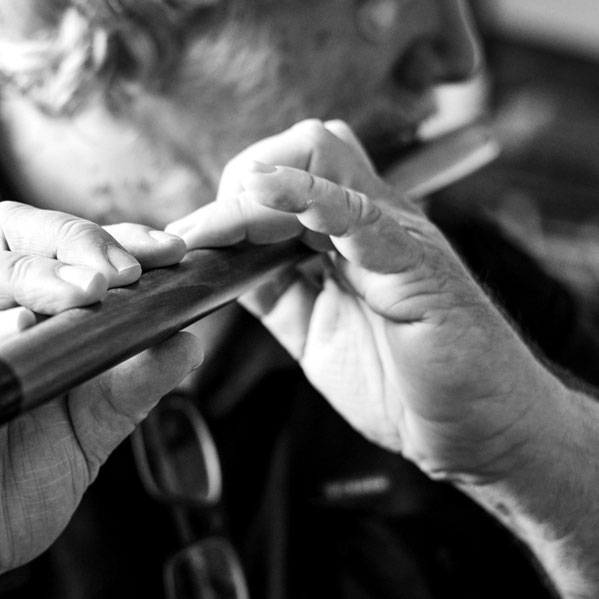
De Juer et de Baler (with Pierre Hamon)
Pierre Hamon - flutes, bagpipes, percussion
Norbert Rodenkirchen - flutes, harp,
Instrumental music in double versification, as described by Johannes de Grocheo in 13th-century Paris under the names Stantipes (Estampie) and Ductia, had developed over several centuries in parallel with related vocal forms such as the Sequence, Lai, and Nota. An almost archaeological approach is required to musically reflect the carefully researched traces of double-versification instrumental music from earlier medieval periods, in the context of the closely related vocal repertoire—here, beginning with music from the 11th century. The aim of this program is to explore the fascinating phenomenon of the estampie—a genre that is both virtuosic and contemplative—starting from its earliest manifestations.
In 2025 the two artists released the program as CD on nemu records (see links). In the same year they were invited to present their duo recital at the prestigious EMV Early Music Festival in Vancouver.
Hameln anno 1284
"Hameln anno 1284 / Medieval flute music - On the trails of the Pied Piper" is the most popular program of Norbert Rodenkirchen and was invited to more than 15 countries until today. Originally commissioned by the WDR radio as a live program about the historic backgrounds of the ratcatcher legend, seen from the perspective of early music it develops the flute performance of a wandering musician of the late 13th century, who plays tunes by Wizlaw of Ruegen and old slawic dance fragments, using flutes of that period. The city of Hameln used Norbert´s CD for its successful UNESCO application as world cultural heritage.
In Europe this program can be booked directly by contacting Norbert Rodenkirchen, see "contact". For USA and Canada please contact the agency Seth Cooper Arts, see link below.
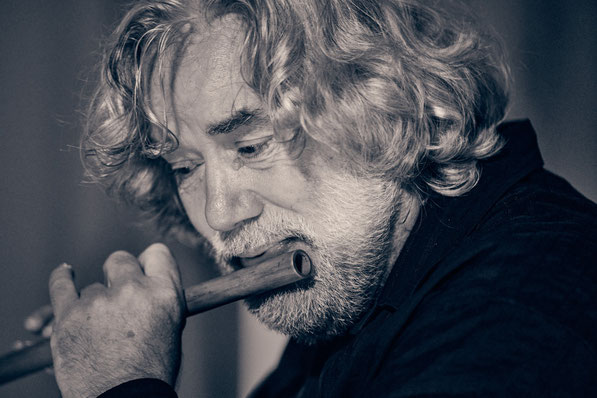
OCCIDENTANA - FLUTE Music BEFORE 1000
"Occidentana - Flute Music Before 1000" presents instrumental versions of medieval monody from the Carolingian period and earlier - played on medieval traverso. A main genre of the program is the "sequela", a melodic model for sequence poems, beginning with the "Liber hymnorum" of the monk Notker Balbulus of St Gallen. These early tunes were also used as instrumentals and are complemented by melodic fragments from late antiquity. Also featured are improvisations on the Merovingian Severin´s Lyre, the earliest find of a Cologne musical instrument from the 7th century and archaic compositions by Norbert Rodenkirchen.
Carmina Burana Today
Ensemble project for 6 musicians, also a trio version is available (voc., fl., fiddle):
Carmina Burana Today
Candens Lilium
Artistic direction (transcriptions, reconstructions, arrangements): Norbert Rodenkirchen
A completely new approach to the medieval Carmina Burana with Sabine Lutzenberger, Ian Harrison, Hanna Geisel, Philipp Lamprecht, Albrecht Maurer and Norbert Rodenkirchen (with shawms, bagpipes, drums, flutes, harp, fiddle, rebec, flutes and voices).
Tibia ex tempore - Medieval Flute Meditations